Egyptian archaeologists have found a large cemetery and a residential area at Kom el-Khilgan in Dakahlia Governorate. The site records human activity from the Predynastic Period through the Greek and Roman eras.

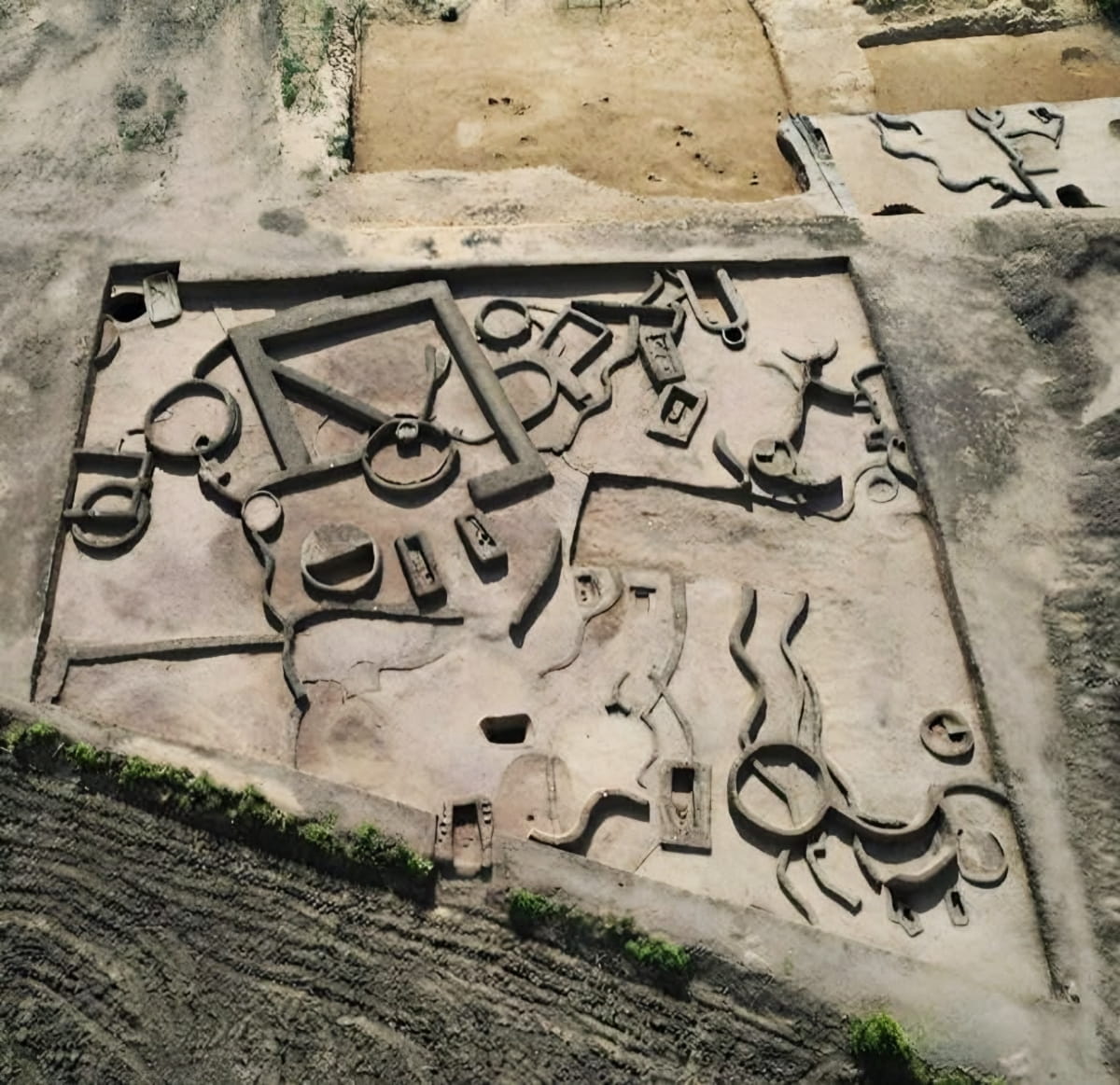
View of the excavations. Credit: Courtesy of the Egyptian Ministry of Tourism and Antiquities
The cemetery began during the first half of the fourth millennium BCE, when Lower Egyptian culture, linked with Buto I and Buto II, flourished in the Nile Delta. Excavators found simple oval graves cut into sandy soil. The burials show several body positions, pointing to differences in burial customs among early communities.
Grave goods were modest. Small handmade pottery vessels and marine shells were placed with the dead. The large number of burials suggests a sizable community lived in the area during this early period.
The site also holds a residential area from the Second Intermediate Period, along with burials dating from the same era into the New Kingdom. Mudbrick buildings, grain silos, ovens, and hearths offer evidence of daily work and food storage.

Another view of the excavations. Credit: Courtesy of the Egyptian Ministry of Tourism and Antiquities
Archaeologists also found curved sinusoidal walls around residential and burial structures. Such walls were used in Egypt from the Middle Kingdom through the New Kingdom. Pottery, stone tools, and large amounts of fish, bird, and animal bones were found across the settlement.
The food remains offer clues about the diet of people who lived at Kom el-Khilgan. They also point to the role of fishing and animal use in daily life during the Second Intermediate Period.

One of the tombs discovered at the site. Credit: Courtesy of the Egyptian Ministry of Tourism and Antiquities
Several graves date from Egypt’s 15th through 17th dynasties and the early New Kingdom. Their presence adds evidence for settlement in the eastern Delta during the Hyksos period. The site lies close to Avaris, the major Hyksos center in the eastern Delta.
The graves vary in form and include mastabas and burials with cornices. Early study also shows differences in burial positions, age groups, and funerary customs. Grave goods include jewelry, amulets, scarabs, tools, bronze weapons, pottery, and Tell el-Yahudiyeh vessels.
Tell el-Yahudiyeh pottery is closely linked with the Second Intermediate Period. Its presence at Kom el-Khilgan adds another sign of the site’s ties with wider cultural trends in the Delta during the period.

Amulets and scarabs found among the grave goods. Credit: Courtesy of the Egyptian Ministry of Tourism and Antiquities
One mudbrick tomb dates to the start of the 18th Dynasty. Archaeologists found pottery vessels and bronze tools inside. Nearby, they also uncovered the foundations of a thick-walled mudbrick building. Pottery fragments and stone tools on its floor point to the early New Kingdom.
The site was used again during the Ptolemaic period. Excavators found several simple burial pits, including the burial of a child placed inside two reused amphorae. Reusing large vessels as coffins was a known burial practice during the period.
Together, the finds show repeated use of Kom el-Khilgan across several thousand years. The cemetery records changing burial customs, while the settlement provides evidence of homes, food storage, craft work, and diet.
The Egyptian mission continues its work at the site. Further excavation is expected to add more evidence about how communities lived and buried their dead in the eastern Nile Delta over time.
More information: Ministry of Tourism and Antiquities
Leave a Reply