The Norman Conquest of England in 1066 has long centered on a fight for the English crown. New research argues Rome also played a major part in the story.

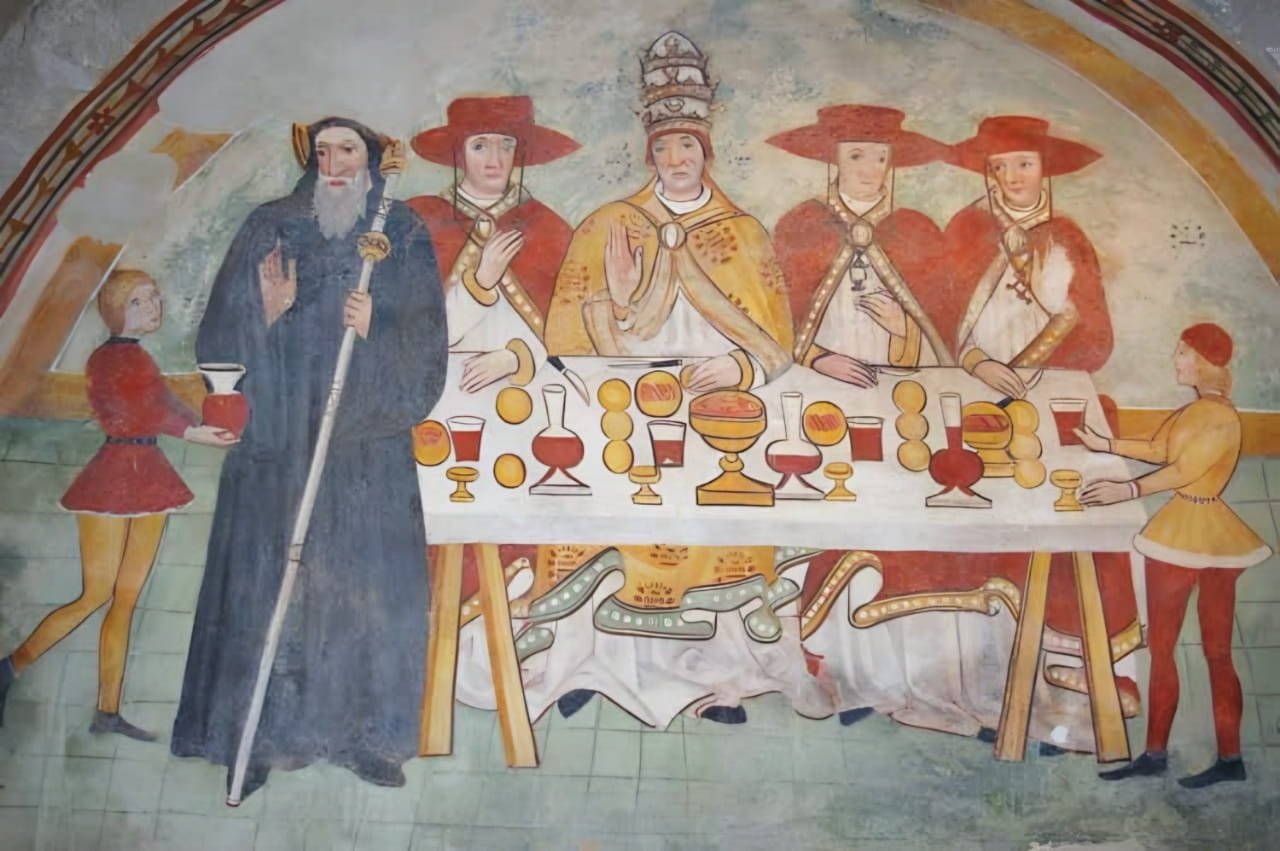
Depiction of Pope Alexander II with cardinals. Public domain.
Historian Tom Licence of the University of East Anglia examined excerpts from a lost letter by Pope Alexander II. The passages survive in medieval collections of papal texts held in the Vatican archives.
The letter suggests England’s place in a bitter dispute between rival popes helped shape Alexander’s support for William of Normandy. The conflict divided Western Christendom several years before William’s army crossed the English Channel.
In 1061, rival groups elected two popes. Alexander II gained support from one faction, while Bishop Cadalus of Parma became the rival pope Honorius II. Honorius also had strong backing from the Holy Roman Empire and supporters in parts of northern Europe.

William of Normandy receives news of King Harold beside a cross-bearing banner, commonly identified as the papal standard sent by Pope Alexander II. Detail from the Bayeux Tapestry. Credit: Blidfried, public domain
The dispute was still active when Harold Godwinson became king of England in January 1066. Licence argues Harold’s policy toward the rival papal groups could have damaged his standing with Alexander.
One passage in Alexander’s letter accuses the English of turning away from St. Peter’s protection. The pope blamed people he described as driven by pride and linked them with Satan. Earlier historians had noted the harsh language but often treated the remarks as unclear.
Licence connects the words to the papal split of the 1060s. In his reading, Alexander was accusing England of leaving his side and supporting his rival. This gives the passage a political meaning tied to the wider fight for control of the Church.
The finding also offers a new explanation for Alexander’s support of William. Papal backing for the Norman invasion has often been linked to Harold’s disputed claim to the throne and claims over an oath Harold had made.
The new reading places those issues inside a larger European conflict. If Harold had backed Alexander’s rivals, the pope had a reason to favor his removal from power. William’s campaign then gained support from a papacy involved in a wider struggle over authority.
Alexander’s support did not decide the battle by itself. William still needed an army, ships and a successful campaign in England. The research instead points to a political setting in Rome which helped shape how the invasion was viewed.
The lost letter is especially useful because Alexander’s full register of letters has not survived. Only copies and excerpts from some letters remain in later medieval collections. Two excerpts from this letter survived in collections of papal rescripts.

A scene from the Bayeux Tapestry that shows a medieval dining scene involving Bishop Odo. Credit: Wikimedia Commons, Public domain
The study appears in Licence’s new book, Harold: Warrior King, published by Yale University Press. The research arrives as the British Museum prepares an exhibition featuring the Bayeux Tapestry, a key source for the events surrounding the Norman Conquest.
The new interpretation places 1066 within a wider contest involving England, Normandy, Rome, the Holy Roman Empireand rival groups within the Church. The Battle of Hastings still decided who controlled England, but events in Rome helped shape the political and religious case for William’s invasion.
More information: University of East Anglia
Leave a Reply