A 3,200-year-old wooden tomb at ancient Gordion in central Turkey is giving archaeologists new evidence about Phrygian burial customs, as well as their building and metalworking skills. The tomb lies within the huge mound known as the Midas Tumulus. However, according to a report by Hürriyet Daily News, experts now link the burial to Gordias, the father of King Midas.

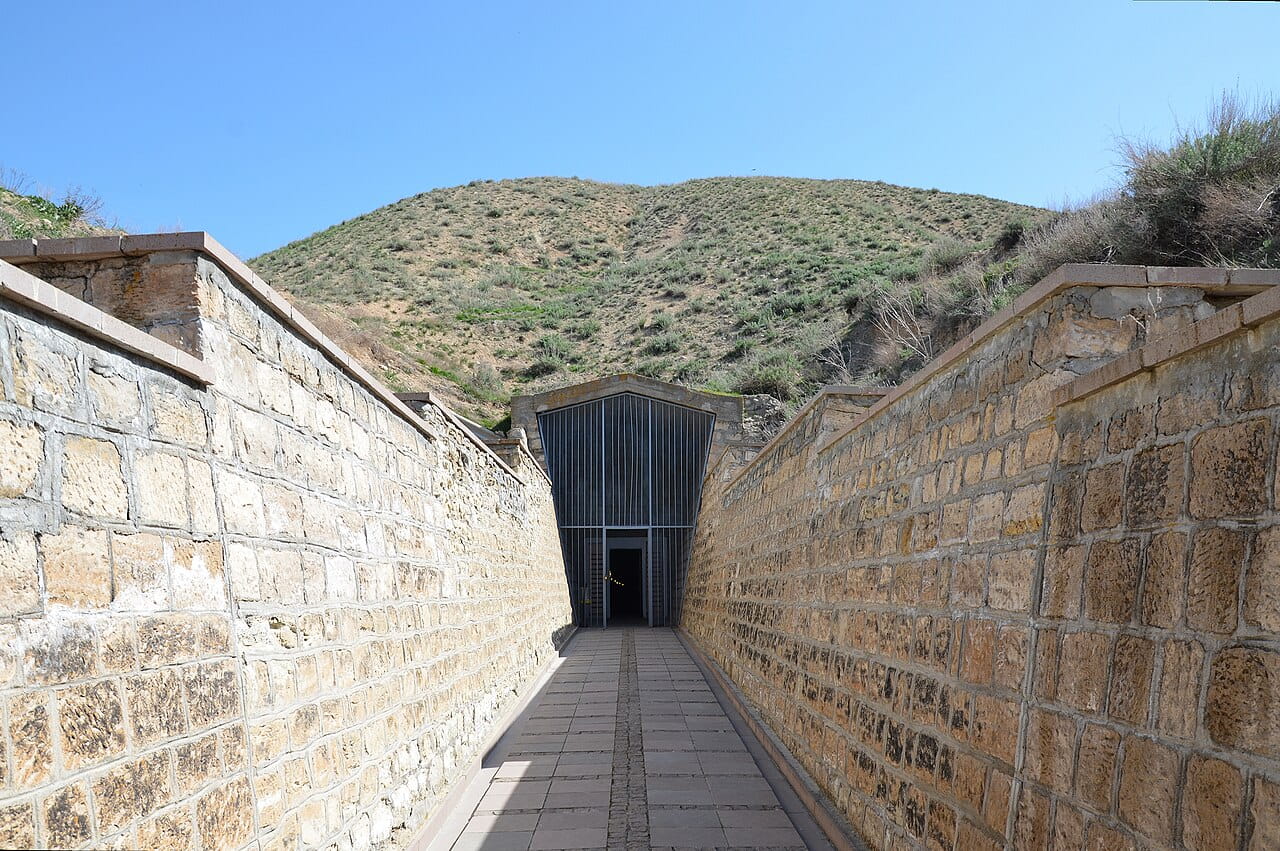
Entrance to the Great Tumulus at Gordion, believed to be the tomb of Gordias, father of King Midas. Credit: Carole Raddato, CC BY-SA 2.0
The mound stands about 53 meters high and measures 300 meters across. A wooden chamber sits at its center, measuring 6.15 by 5.15 meters. Juniper beams form much of the chamber, and the wood has survived for about 3,200 years with little decay.
The survival of the timber is rare for an ancient burial. The wooden structure also shows how Phrygian builders worked with large tree trunks to create a strong burial chamber beneath a massive mound. The tomb offers rare evidence of woodwork at Gordion, the main center of Phrygian power.
The burial also held 99 fibulas, or bronze brooches. Their number points to the skill of Gordion’s metalworkers and the role of brooches in Phrygian dress and burial rites. Archaeological work at the site has long linked Gordion with early fibula production.

Tumulus MM, also known as the “Midas Mound” or Great Tumulus, is the largest burial mound at Gordion. Credit: Carole Raddato, CC BY-SA 2.0
The finds also include objects tied to woodworking and textiles. Together, they point to a society with skilled makers working in several skilled trades. Some objects from the mound are now held at the Museum of Anatolian Civilizations in Ankara, while other finds are displayed at the Gordion Museum.
Despite its famous name, the Midas Tumulus is not thought to be the burial place of King Midas. Archaeologists instead identify Gordias as the person buried there. The name survived because Midas became one of the best-known figures in ancient Phrygian history.
The burial mound was excavated in 1957 by a Turkish and an American scientist. The team used drilling methods available at the time to reach the chamber. A later stage of the work involved an 82-meter tunnel dug by miners from Zonguldak on Turkey’s Black Sea coast.

Model showing the wooden structure inside the Midas Tumulus at Gordion, with a reconstructed head of the man buried there. Credit: Stipich Béla, CC BY-SA 3.0
The early excavation caused some damage to parts of the tomb and textile remains. Still, the wooden chamber and many grave goods survived. The preserved timber now gives researchers a rare chance to study ancient building methods at Gordion.
Gordion was the capital of the Phrygian kingdom and grew into a major center in Iron Age Anatolia. The wider area around the ancient city holds about 90 of the 130 registered burial mounds in Polatlı district. The Midas Tumulus is the largest mound at Gordion and ranks among the biggest ancient tumuli known.
The site has also gained global recognition in recent years. UNESCO added Gordion to its World Heritage List in 2023. Its burial mounds, homes, roads and workshop remains provide a long record of life in the Phrygian capital.
The wooden tomb adds a rare piece to this record. Its well-preserved juniper beams, large group of fibulas and other grave goods offer direct evidence of Phrygian workmanship and burial practice. The burial also helps separate the historical Gordias from the later fame of his son Midas. The burial goods also show how status, dress and skilled work came together in elite funerals during the early Phrygian period. Such evidence is rare because wood and woven materials usually decay long before archaeologists reach ancient graves.
Leave a Reply