The wreck of Royal Navy warship HMS Tiger has been found in the English Channel, 118 years after a deadly collision sank the vessel off the Isle of Wight.

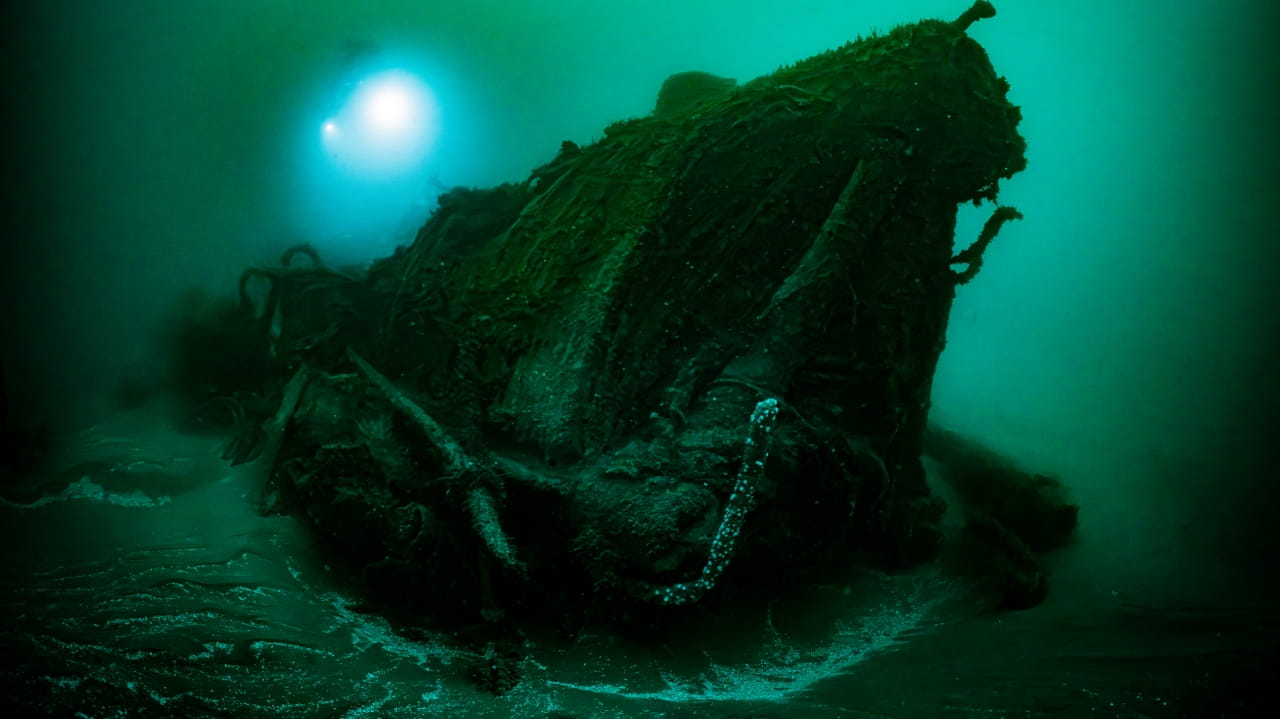
Stern section of HMS Tiger, showing the boiler where the ship was cut in two. Credit: Dr. Steffen G. Scholz
A team of divers and maritime historians from ProjectXplore located the wreck after five years of research in historical archives. The group studied records from the ship’s final voyage and used the data to narrow down the search area.
HMS Tiger disappeared in 1908 during a Royal Navy training exercise. The warship strayed into the path of another vessel and suffered a catastrophic collision. The impact split HMS Tiger in two and sent the ship to the seabed.
The disaster killed more than half of the 57 people aboard. Fewer than 30 crew members survived the sinking. For more than a century, divers searched for the missing warship without finding its remains.

Dan McMullen inspects the ship’s bell. Credit: Dr. Steffen G. Scholz
ProjectXplore’s team has now identified the shattered wreck site. The group previously located the wreck of Royal Navy cruiser HMS Nottingham in the North Sea in 2025.
The find comes as the UK government seeks stronger legal protection for military shipwrecks through the Armed Forces Bill. Under the proposed changes, newly found military wrecks would receive legal protection from the time of their discovery through a protected place designation.

Stern steering section of HMS Tiger. Credit: Dan McMullen and Guy Trees
The proposed rules would make disturbing or removing objects from protected military wrecks without permission an offence. Divers would still be allowed to visit the sites, provided they follow a “look but don’t touch” approach.
Current UK law protects dozens of military wrecks under the Protection of Military Remains Act. Yet the existing rules only cover vessels lost within the past 200 years. The proposed changes would extend protection to much older military wrecks, including vessels dating back to the Spanish Armada.

Sonar scan image of HMS Tiger. Credit: Leo Fielding
The wider protection would also cover some merchant ships lost while serving military purposes under Admiralty orders. Such changes would bring many more historic wreck sites under legal protection, including vessels linked to former enemies of Britain.
For HMS Tiger, the timing of the discovery is especially significant. The wreck holds the remains and personal history of sailors who died during a training exercise more than a century ago.

HMS Tiger, which sank in 1908. Pictorial Post Card Co. (1904–1909). Public domain
ProjectXplore welcomed the proposed changes, saying stronger protection would help preserve HMS Tiger and the memory of those connected with the ship.
The Royal Navy also stressed the importance of keeping wreck sites intact while allowing divers to visit them. The approach gives divers a chance to see historic sites while leaving wrecks, artifacts, and human remains undisturbed.
The discovery of HMS Tiger closes a long chapter in the search for one of the Royal Navy’s lost ships. The wreck now faces a different future, with proposed legal measures aimed at protecting the site for research, diving, and remembrance.
Leave a Reply